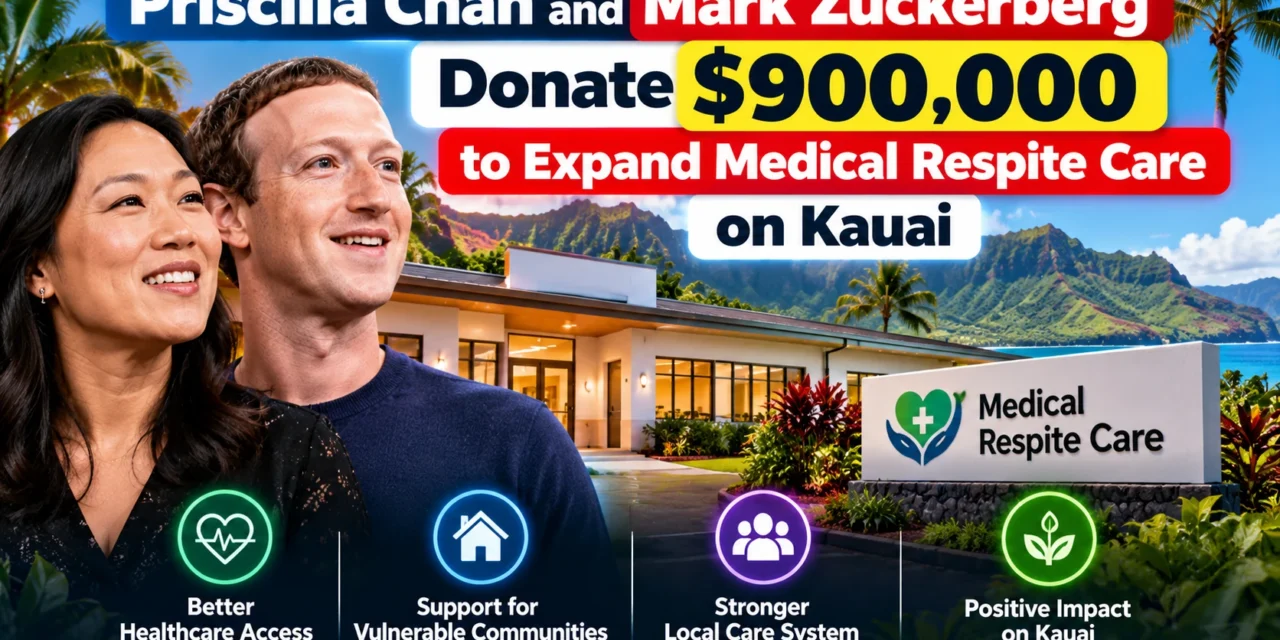
Priscilla Chan and Mark Zuckerberg have donated $900,000 to help people on Kauai who are homeless or unstably housed recover from illness and injury. The gift will help expand Pūlama Ola Kauaʻi, a medical respite program in Līhuʻe.
This article explains what medical respite is, what the donation will fund, what the new village will look like, and the couple’s long history of giving in Hawaii. The Times of India link you sent was blocked on my end, so this is based on the original local report from Kauai Now, published October 13, 2026.
Quick summary
- The gift: $900,000 from Priscilla Chan and Mark Zuckerberg.
- Who received it: Project Vision Hawaiʻi, the group developing Pūlama Ola Kauaʻi.
- What it’s for: Expanding medical respite beds, support services, and integrated care in Līhuʻe.
- The new village: 18 individual units, each with a kitchenette and bathroom.
- Who it helps: Adults experiencing homelessness or housing instability who are recovering from illness, injury, or a hospital stay.
What is medical respite?
Medical respite is short-term care for people who are well enough to leave the hospital but have no safe or stable place to recover. Without it, many end up back on the street or return to the hospital.
Pūlama Ola Kauaʻi was created in partnership between local health care providers, social service agencies, and community organizations. It offers a safe, supportive place where people can heal while connecting to the resources they need for long-term stability.
According to the report, the program helps to:
- Reduce hospital stays and costs
- Improve health outcomes
- Help people move toward stability
- Treat every person with compassion and respect
What will the $900,000 pay for?
The donation will help Project Vision Hawaiʻi speed up the development and operation of the new Pūlama Ola village in Līhuʻe. According to the report, the funds will help:
- Increase capacity for medical respite beds.
- Provide essential support services.
- Offer integrated care for patients recovering from illness or injury while facing housing instability.
- Pay for facility improvements and operating needs.
- Support people as they recover and move into permanent housing.
What will the new village look like?
|
Feature |
Detail |
|---|---|
|
Location |
Līhuʻe, Kauai |
|
Number of units |
18 individual units |
|
In each unit |
A kitchenette and a bathroom |
|
Use |
A mix of medical respite and affordable rentals |
|
Partners |
Project Vision Hawaiʻi and Poʻipū Beach Villas, among others |
What did the organizers say?
Ryan Naka, director of strategy and impact at Project Vision Hawaiʻi, said Pūlama Ola represents hope and healing for the community’s most at-risk people. He described the gift as extraordinarily generous and said that, together with the partnership with Poʻipū Beach Villas, it lets the project move forward with confidence. He added that the support affirms the importance of fair access to health care in rural and island communities.
The couple’s history of giving in Hawaii
Chan and Zuckerberg own more than 2,000 acres of land on Kauai. They often make significant donations through the Chan Zuckerberg Kauaʻi Community Fund at the Hawaiʻi Community Foundation.
|
Year |
Gift |
|---|---|
|
November 2024 |
$1 million to 26 nonprofits with operations on Kauai |
|
2022 |
$1.8 million to Wilcox Medical Center for technology upgrades |
|
2022 |
$10 million to the University of Hawaiʻi at Mānoa’s John A. Burns School of Medicine for the Kauaʻi Medical Training Track, to address the doctor shortage |
|
2022 |
$50 million to the University of Hawaiʻi at Mānoa for ocean research, their largest gift in Hawaii |
|
October 2025 |
$1 million to more than two dozen nonprofits in Hawaii |
|
October 2026 |
$900,000 to Project Vision Hawaiʻi for Pūlama Ola Kauaʻi |
Why this matters
- Housing and health are connected. People without stable housing often struggle to recover after a hospital stay.
- Rural areas have fewer options. Island communities have limited health and housing resources, so each new bed matters.
- It may lower costs. The program aims to reduce hospital stays and costs.
- It adds affordable housing. Some units will serve as affordable rentals, not only medical respite.
Things to keep in mind
- One donation is not the whole project. The village depends on several partners and funders.
- Timelines weren’t given. The report doesn’t say when the village will open.
- Results will take time. The impact on patients and hospital use will become clearer once the units are running.
Frequently asked questions
Who donated the money? Priscilla Chan and Mark Zuckerberg.
Who received it? Project Vision Hawaiʻi, which is developing Pūlama Ola Kauaʻi.
What is Pūlama Ola Kauaʻi? A short-term medical respite program in Līhuʻe for adults who are homeless or unstably housed and recovering from illness, injury, or hospitalization.
How many units will the new village have? 18, each with a kitchenette and a bathroom.
Will the units be only for medical care? No. They will serve as a combination of medical respite and affordable rentals.
Why do Chan and Zuckerberg give on Kauai? They own more than 2,000 acres there and have repeatedly donated to local health, education, and nonprofit causes.
Conclusion
The $900,000 gift gives a practical boost to a program that fills a real gap: a safe place to recover for people who have nowhere to go after the hospital. By adding beds, services, and a mix of respite and affordable housing, the new Līhuʻe village could help patients heal and move toward stable homes. It also continues a long pattern of support from Chan and Zuckerberg for health and community projects across Hawaii.
Note: This article is based on a Kauai Now report dated October 13, 2026, rewritten in my own words. I could not open the Times of India article, so please check it and Project Vision Hawaiʻi for any additional details.