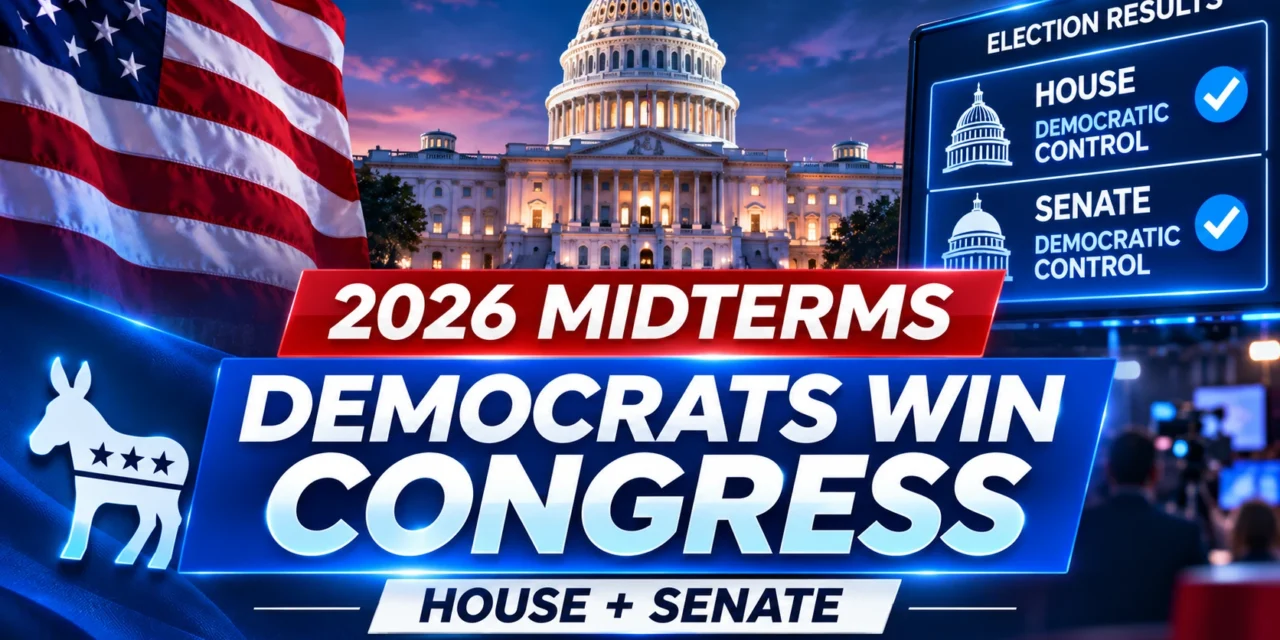
The United States witnessed a major political shift following the 2026 midterm elections, as the Democratic Party secured control of both the House of Representatives and the Senate. The result marks a significant setback for President Donald Trump and his Republican Party, creating fresh challenges for the administration during the final two years of his presidency.
The election outcome reflects growing public dissatisfaction over several issues, including rising living costs, trade tariffs, and the ongoing war with Iran. The results have also raised questions about America’s foreign policy, defence spending, and political direction.
In this article, we look at the major developments from the 2026 US midterm elections, why Democrats secured a strong victory, and what the results could mean for the United States and its international partners.
What Happened in the 2026 US Midterm Elections?
The US midterm elections took place on November 3, 2026. Democrats secured victories in both chambers of Congress, gaining control of the House of Representatives and the Senate.
The outcome was widely seen as a rejection of Trump’s policies and leadership. With Democrats controlling Congress, the administration could face greater opposition when trying to pass new legislation.
The election results could also give Democratic lawmakers more power to investigate government decisions and examine allegations of corruption.
Key highlights of the election
-
Democrats gained control of both the House and Senate.
-
Republicans suffered a major electoral setback.
-
Rising living costs and fuel prices became important election issues.
-
Trump’s policies on tariffs and the Iran war faced criticism.
-
House Speaker Mike Johnson announced plans to step down as Republican leader.
Despite the defeat, Trump said he was willing to accept the election results and work with Democrats.
Why Did Republicans Lose the Midterm Elections?
Several political and economic issues contributed to the Republican Party’s defeat. Voters expressed dissatisfaction with the administration’s handling of domestic and international challenges.
1. Iran War Becomes a Major Election Issue
The ongoing conflict with Iran emerged as one of the biggest factors influencing the election.
The war contributed to rising fuel prices and increased economic pressure on American households. Vice President JD Vance acknowledged the conflict’s impact on the Republican defeat and called for an honest discussion about its political consequences.
Trump also recognised that the Iran war had played a major role in the election outcome, although he maintained that the military action was necessary.
2. Rising Living Costs and Economic Pressure
The cost of living remained another important concern for American voters.
Higher fuel prices and everyday expenses created additional financial pressure on households. These concerns contributed to dissatisfaction with the administration and influenced voting decisions.
3. Trade Tariffs and Business Concerns
Trump’s trade policies also faced criticism during the election period.
The tariffs imposed on trading partners affected businesses and created uncertainty around international trade. Canada, in particular, continued its efforts to reduce economic dependence on the United States.
These developments added to concerns about the administration’s economic strategy.
Mike Johnson to Step Down After Republican Election Defeat
One of the major developments following the election was the announcement that US House Speaker Mike Johnson would step down as Republican leader.
Johnson had served as Speaker of the House since October 2023. His decision came after Democrats secured control of both chambers of Congress.
As one of the highest-ranking Republicans in the country, his departure represents another challenge for the party as it prepares for a new political environment.
Republican leadership will now face the task of rebuilding its position and developing a strategy to respond to Democratic control of Congress.
What Does the Democratic Victory Mean for Ukraine?
The election results have also attracted attention from international leaders, particularly Ukrainian President Volodymyr Zelenskyy.
Zelenskyy expressed hope that Democratic gains in Congress could lead to stronger American support for Ukraine in its ongoing war with Russia.
He highlighted the Democratic Party’s public support for Ukraine and its interest in rebuilding stronger relations between the United States and Europe.
Additional American assistance could provide important support to Kyiv and potentially influence the wider conflict with Russia.
However, the actual level of future support will depend on congressional decisions and the administration’s foreign policy approach.
US Defence Companies Face Pressure After Election Results
The Democratic victory also affected financial markets, particularly shares of major American defence companies.
Investors became concerned that increased Democratic influence in Congress could create pressure on Pentagon spending plans.
Some major defence stocks recorded declines following the election:
|
Defence Company |
Reported Share Decline |
|---|---|
|
Lockheed Martin |
6.9% |
|
RTX |
3.1% |
|
L3Harris Technologies |
6.9% |
The defence sector had benefited from Trump’s proposed $1.5 trillion military budget for 2027 and increased demand for military equipment during the Iran conflict.
However, Democratic control of Congress could create greater scrutiny of defence spending and future military budgets.
Canada Will Continue Reducing Its Economic Dependence on the US
Canada has indicated that its strategy to diversify international trade will remain unchanged despite the Republican election defeat.
Prime Minister Mark Carney has maintained that Canada should develop stronger trading relationships with other countries instead of relying heavily on the American market.
Although Democratic leaders have criticised Trump’s trade tariffs against Canada, Canadian officials believe that diversifying the economy remains important for long-term stability.
This development highlights how changes in American politics can influence trade decisions across neighbouring countries.
Trump Faces Questions Over Impeachment and Political Future
Following the election defeat, Trump also faced questions about the possibility of impeachment after Democrats take control of Congress.
The President warned that an impeachment effort could damage the Democratic Party, arguing that there was no reason for such action.
At the same time, Trump maintained that the Iran war was necessary, even while acknowledging its impact on Republican election losses.
The next two years could therefore become politically challenging for his administration as Democrats gain greater influence over congressional decisions.
Quick Overview: Major Developments After the 2026 US Midterm Elections
|
Development |
Key Update |
|---|---|
|
Election results |
Democrats control both chambers of Congress |
|
Iran war |
Identified as a major factor behind Republican losses |
|
Mike Johnson |
Plans to step down as Republican leader |
|
Ukraine |
Zelenskyy hopes for increased US assistance |
|
Defence stocks |
Major defence companies recorded market declines |
|
Canada |
Continues efforts to diversify trade |
|
Trump |
Faces greater political opposition in Congress |
Frequently Asked Questions
1. When were the 2026 US midterm elections held?
The US midterm elections were held on November 3, 2026.
2. Which party won the 2026 US midterm elections?
The Democratic Party won control of both the House of Representatives and the Senate.
3. Why did Republicans lose the midterm elections?
Major contributing issues included the Iran war, rising living costs, higher fuel prices, and dissatisfaction with Trump’s trade policies.
4. Who is stepping down after the Republican election defeat?
US House Speaker Mike Johnson announced that he would step down as Republican leader.
5. How could the election results affect Ukraine?
Ukrainian President Volodymyr Zelenskyy hopes Democratic control of Congress could lead to increased American assistance and stronger relations with Europe.
6. What happens after Democrats take control of Congress?
Democrats will gain greater influence over legislation, government investigations, federal spending decisions, and the President’s policy agenda.
Conclusion
The 2026 US midterm elections have created a major political challenge for Donald Trump and the Republican Party. Democratic control of both chambers of Congress could significantly influence the administration’s decisions during the remaining two years of its term.
From the Iran war and rising living costs to international trade and defence spending, several issues shaped the election outcome. The results could also influence America’s relationships with countries such as Ukraine and Canada.
The coming months will show how Democrats use their newly gained congressional power and how the Trump administration responds to a stronger political opposition.
Source: The Hindu’s US Midterm Elections 2026 live coverage, updated November 5, 2026. This article is based on the supplied source material