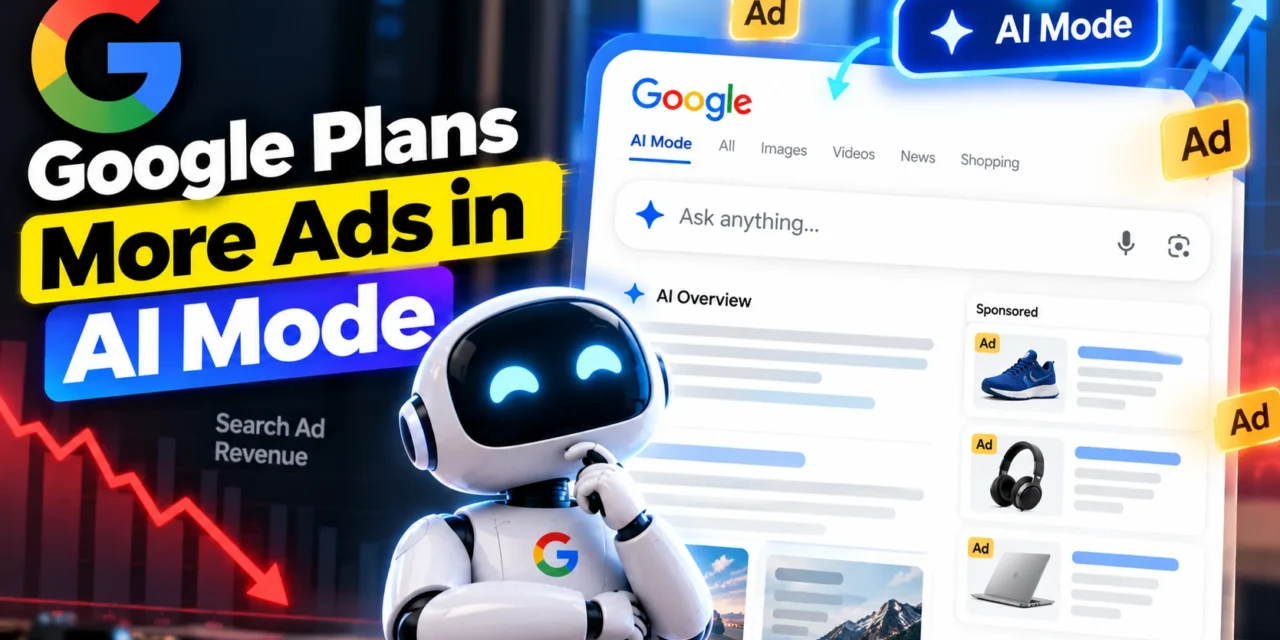
Google’s AI-generated search answers are changing how people use search, and that is a problem for a business built on clicks. After its latest earnings call, Google said its answer is to put more ads into AI Mode, its AI-powered search experience.
This article explains what Google said, why AI Mode is hurting ad revenue, what changes are coming, and what it means for users and advertisers. The details come from a Mashable report dated October 31, 2026, which draws on Ars Technica’s reading of Google’s financial disclosure. Some of the framing, such as calling this “a fix,” is the reporters’ interpretation.
Quick summary
- The problem: AI Mode answers questions directly on the search page, so fewer people click links, including ads.
- Google’s plan: Show more ads in AI Mode, including swapping sponsored links throughout a user’s session.
- International rollout: AI Mode ads will soon expand to markets outside the US.
- The catch: Google says it earns less from AI Mode ads than from traditional search ads, and the fix will take time.
- Stock context: The earnings call caused a big reaction in the stock market.
What is the problem?
AI Mode gives AI-generated summaries that answer a question on the results page, instead of sending users to the most authoritative links. This leads to what is called zero-click searches, where people get what they need without clicking anything.
That matters because Google Ads is a pay-per-click service that earns billions of dollars every quarter. If people click less, advertisers pay less.
|
Traditional search |
AI Mode |
|---|---|
|
Shows a list of links and ads |
Shows an AI answer with contextual ads |
|
People click links to find answers |
People may get answers without clicking |
|
Many advertisers bid for placements |
Fewer advertisers currently run ads |
|
Pay-per-click revenue is well established |
Revenue per search is currently lower, according to Google |
What is Google doing about it?
According to the report, Google said in its financial disclosure that it plans to bring even more search ads into AI Mode.
- Today: Google already shows contextual ads alongside AI-generated answers in AI Mode.
- Next: It plans to include more ads by swapping out sponsored links throughout a user’s session as they chat with AI Mode.
- Also: It will soon roll out AI Mode ads in international markets.
Why it will take time
Google warned investors this will not be a quick fix:
- Fewer advertisers. Google currently earns less from AI Mode ads than from traditional search ads because fewer advertisers run them.
- Learning curve. It will take time for advertisers to understand the benefits of advertising in AI Mode.
Is Google changing course on AI?
The report says Google is not backing away from AI. The company has invested heavily in the technology and plans to go forward even though AI answers may reduce revenue from traditional search ads, one of its biggest income sources. In the meantime, users will likely see more ads.
What this means for different groups
For users
- More ads in AI answers. Expect more sponsored content during AI Mode conversations.
- Changing sponsored links. Ads may change as a conversation continues.
- Be mindful of labels. Check which results are ads and which are organic answers or links.
For advertisers
- A new channel to test. AI Mode ads may become an important part of search campaigns.
- Lower early returns. Google itself says revenue per search is lower for now, so test carefully.
- Fewer competitors at first. With fewer advertisers, costs may differ from traditional search.
- Measure results separately if the platform allows it, so you can see how AI Mode ads perform.
For publishers and websites
- Fewer clicks. AI summaries may reduce traffic from search.
- Focus on original value. Content that offers unique information may still earn visits.
Why this matters
- It shows a tension at the heart of search. The best user experience, a direct answer, can reduce the clicks that pay for search.
- Ads are moving into AI conversations. AI chat is becoming a new advertising space, just as OpenAI has expanded ads in ChatGPT.
- The business model is under pressure. Investors are watching how Google can keep earning as search changes.
- Trust and transparency are key. Users will want to know when an AI answer is influenced by advertising.
Things to keep in mind
- Plans, not results. These are Google’s plans, and the revenue effect is uncertain.
- Secondhand reporting. The details come from news reports of Google’s disclosure.
- Opinion in the framing. Phrases like “Google’s fix” reflect the reporter’s view.
- Details are limited. The report doesn’t say when the new formats or international rollouts will begin.
Frequently asked questions
What is AI Mode? Google’s AI-powered search experience that answers questions directly on the page.
What are zero-click searches? Searches where people get an answer without clicking any link, which reduces ad and website traffic.
What is Google changing? It plans to show more ads in AI Mode, including swapping sponsored links during a session, and to expand AI Mode ads to international markets.
Does AI Mode make as much money as regular search? Not yet. Google says it earns less from AI Mode ads because fewer advertisers use them.
Will Google stop pushing AI? The report says no. The company plans to keep going with AI.
Conclusion
Google faces a classic dilemma: AI answers make search more useful, but they can reduce the clicks that fund it. Its answer is to bring more ads into AI Mode and wait for advertisers to catch up. For users, that means more ads in AI conversations. For advertisers and publishers, it means a changing landscape that needs close attention and careful testing.
Note: This article is based on a Mashable report by Matt Binder dated October 31, 2026, which cites Ars Technica, rewritten in my own words. Please check Google’s financial disclosures for original details