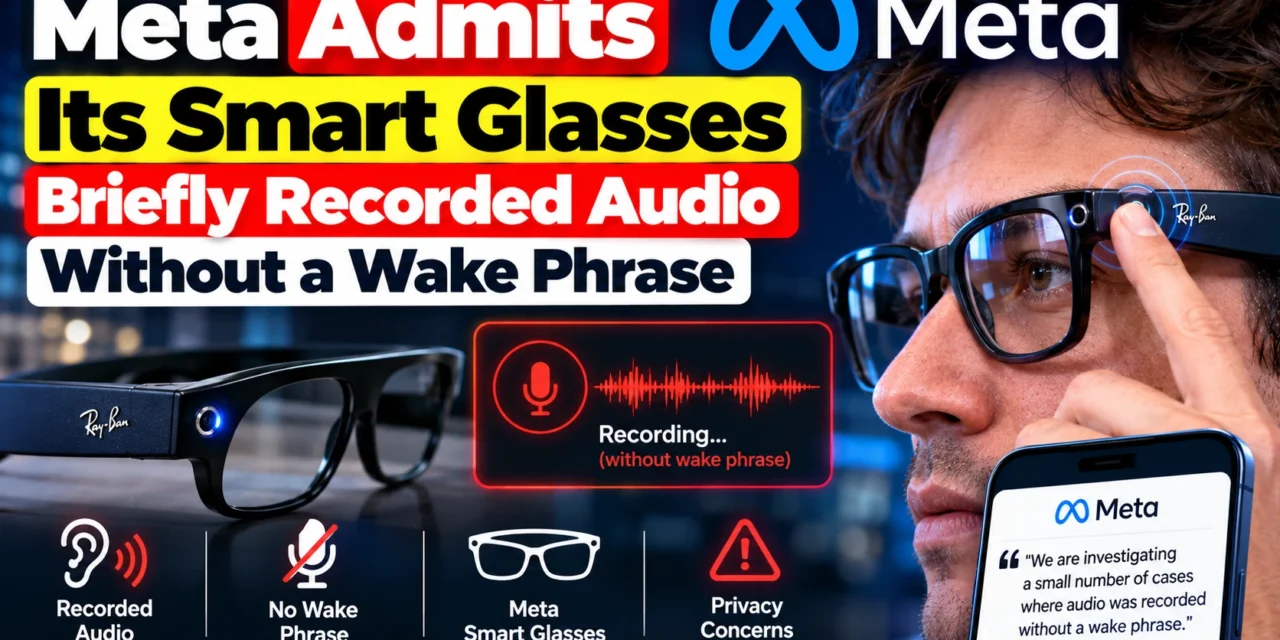
Smart glasses keep running into the same problem: privacy. Meta has now confirmed that its Ray-Ban smart glasses briefly saved audio recordings and transcripts even when users had not said the “Hey Meta” wake phrase. The company says the problem is fixed, but it has not explained what caused it.
This article explains what users found, what Meta said, what the risks are, and what you can do to protect your privacy. The details come from a PCMag Middle East report updated on October 19, 2026.
Quick summary
- What happened: Some Meta smart glasses saved audio and transcripts of conversations to the Meta AI app without the wake phrase being used.
- How it was found: A Reddit user noticed the recordings, and several others reported the same issue.
- Meta’s response: The company says the issue is resolved.
- What’s unknown: Meta has not explained the cause or when the problem began.
- What you can do: Review your voice logs and check microphone and camera settings in the Meta AI app.
What did users find?
A Reddit user noticed that their glasses were saving audio recordings and transcripts of conversations with other people into the Meta AI app. This happened even though:
- They had not said the “Hey Meta” wake phrase.
- The “Respond without Hey Meta” setting was not turned on.
Other details from the report:
- More than one device. The user saw the problem on three separate pairs, including 2nd-gen and 3rd-gen Ray-Ban Meta glasses.
- Others agreed. Several other people said they were having the same experience.
- LED light behavior. The user said the white capture light sometimes blinked while they were simply talking to someone.
- Support advice. When the user contacted Meta, a support staff member reportedly suggested turning off several settings, including microphone and camera permissions.
What did Meta say?
In a statement to Android Authority, Meta acknowledged the unauthorized recording issue. A spokesperson said it has been resolved and added that people can manage, review, and delete voice logs of their interactions with Meta AI in settings at any time.
It’s unclear when the bug first appeared, though the original Reddit post suggests it was fairly recent. Meta has not said what caused it.
Which glasses are involved?
|
Model |
Mentioned in the report |
|---|---|
|
Ray-Ban Meta Gen 2 |
Yes, the user reported the issue |
|
Ray-Ban Meta Gen 3 |
Yes, the user reported the issue |
|
Ray-Ban Meta Audio (audio-only, released last month) |
Mentioned as a model buyers may consider, with no confirmed issue |
A pattern of privacy concerns
This is not the first time Meta’s smart glasses have raised eyebrows. According to the report:
- Video concerns. There were earlier complaints about recording video without consent.
- Capture light tampering. There were issues with the privacy light that signals recording.
- Public restrictions. Courtrooms in the UK and New York no longer allow these wearables, and Norway is reportedly planning stricter measures against their use in public spaces.
Why this matters
- Other people are affected too. The recordings captured conversations with other people, who may not know the glasses are listening.
- It’s about trust. Wake phrases and indicator lights are meant to show when recording happens. If they don’t work as expected, people lose confidence.
- It’s a regulation issue. As bans and rules appear, incidents like this may increase pressure on companies.
- It affects everyday places. Cafes, cars, and family dinners are all settings where audio could be captured without anyone noticing.
What can you do?
If you own Meta smart glasses
- Open the Meta AI app and look at your saved voice logs.
- Delete any recordings you don’t want to keep.
- Check microphone and camera permissions and decide which ones you really need.
- Review settings such as “Respond without Hey Meta” and make sure they match your preferences.
- Update the glasses and the app to the latest versions.
- Tell people nearby if you’re wearing the glasses in private or sensitive settings.
- Report odd behavior to Meta if you notice recordings you didn’t expect.
If you’re considering buying a pair
- Read the privacy settings first and understand what is stored and for how long.
- Check availability and pricing in your country, since the report notes that regional pricing and stock were not confirmed for some markets.
- Compare options, including audio-only models if you want to avoid a camera.
If someone near you wears smart glasses
- Ask politely whether recording is on.
- Be mindful of what you discuss in private.
- Know the local rules about recording in public places.
Things to keep in mind
- The cause is unknown. Meta says it fixed the issue but has not explained why it happened.
- The scale is unclear. The report is based on one Reddit user and several others who agreed, not on a full investigation.
- The fix is Meta’s statement. Independent confirmation was not part of the report.
- Settings matter. Even without a bug, reviewing your permissions and logs is a good habit.
Frequently asked questions
Did Meta confirm the problem? Yes. Meta acknowledged the unauthorized recording issue and said it has been resolved.
What caused it? Meta has not said.
Were recordings made without the wake phrase? According to users, yes. Audio and transcripts appeared in the Meta AI app even without “Hey Meta.”
How can I delete my voice logs? Open the Meta AI app settings, where you can manage, review, and delete voice logs.
Are smart glasses banned anywhere? The report says courtrooms in the UK and New York no longer allow them, and Norway is reportedly planning stricter measures in public spaces.
Should I stop using my glasses? That’s your choice. At a minimum, review your settings and saved logs.
Conclusion
Meta says the accidental audio recording problem is fixed, but the lack of an explanation leaves open questions. For anyone who owns a pair, the practical steps are simple: check your voice logs, review permissions, and keep software updated. As smart glasses become more common, clear privacy protections and honest communication will matter as much as the technology itself.
Note: This article is based on a PCMag Middle East report updated October 19, 2026, rewritten in my own words. Please check Meta’s official statements for updates.