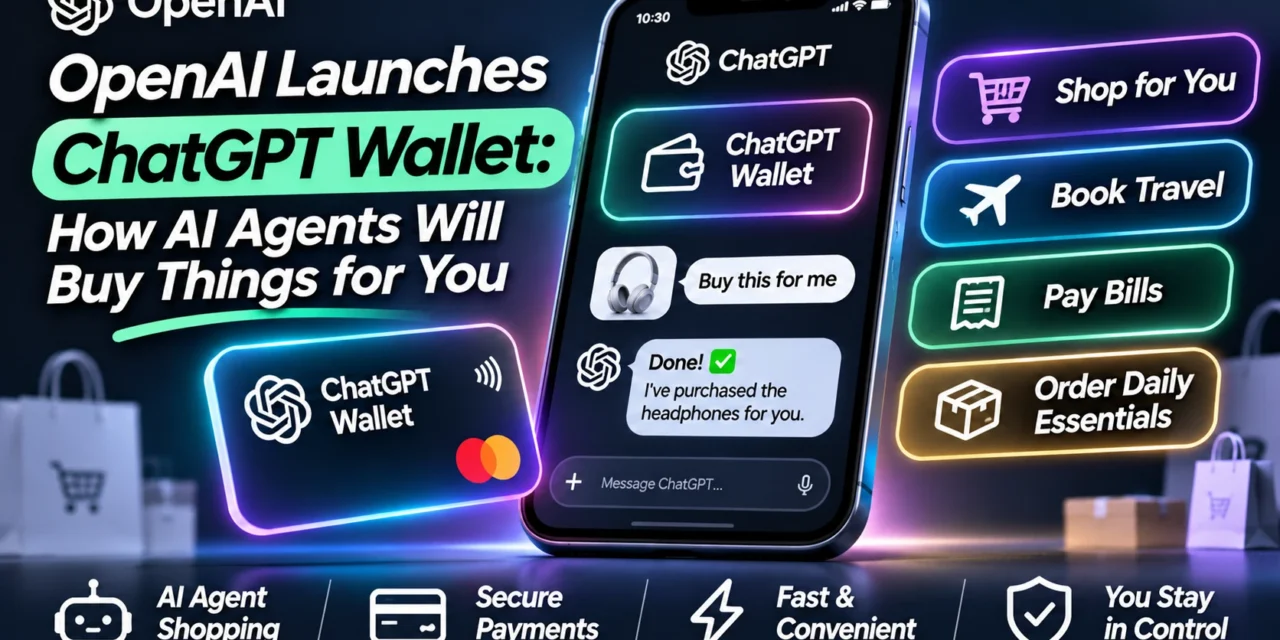
OpenAI has introduced ChatGPT Wallet, a payment tool that lets its AI agent complete purchases for users. You add a card once, and the agent can check out on your behalf, with each purchase needing your approval.
This article covers what was announced, how the security works, who can use it, and why it matters for shoppers and online stores. The details come from a Bloomberg report published by Deccan Chronicle on November 15, 2026, which relies on OpenAI’s statement from Friday. They reflect the company’s own description, so treat the safety claims as official messaging until real-world use tests them.
Quick summary
- What’s new: ChatGPT Wallet, a virtual wallet that AI agents can use to pay for things.
- Built with: American Express, Mastercard and Visa.
- How it works: Add a card once, then approve each purchase without retyping payment details.
- Security: The agent never sees your real card details, and every transaction needs biometric verification such as Face ID or a fingerprint.
- Who gets it first: US subscribers on the Pro tier, through OpenAI’s Dots agent tool.
- Where it doesn’t work yet: Chat, Work, and standalone threads in Codex.
What changes and what doesn’t
| Area | Details |
|---|---|
| Availability | Limited number of US Pro subscribers at first |
| Where it runs | Dots agent tool only |
| Card details | Hidden from the AI agent |
| Approval | Biometric check on every purchase |
| Partners | American Express, Mastercard, Visa |
| Not supported yet | Chat, Work, Codex standalone threads |
1. Why OpenAI is trying again
This is OpenAI’s second push into AI shopping. It launched Instant Checkout in September 2025, which handled purchases inside the chat window but required brands to feed OpenAI up-to-date product inventory. In March, the company shelved it and moved payments into plug-in apps built by third-party brands, saying it would focus on search and product discovery instead.
2. What is different this time
The new wallet lets the agent shop on the open web. It can buy from any e-commerce site, even one with no ChatGPT plug-in, as long as the site doesn’t block the agent. That is a more flexible approach than the old checkout, which depended on merchant cooperation.
3. The limited rollout
OpenAI is starting with a small group of users so it can learn from real use and work with businesses, banks and payment networks on compatibility and reliability. That wording suggests the system still has rough edges.
4. A crowded field
OpenAI is not alone. ChatGPT has 1.2 billion weekly users, and competitors such as Meta’s Muse and xAI’s Grok Bot offer or promote similar shopping abilities. On the same Friday, Google announced that Google Wallet can connect to Gemini so US users can analyze their spending. Google Pay purchases at selected retailers are already possible inside the Gemini app.
5. The blocking problem
Many retailers have been shutting out bots to protect their data and customer relationships, and by extension their ad revenue. United Airlines recently joined Amazon and eBay in blocking agents. OpenAI acknowledged the issue, saying sites need to make sure agents aren’t blocked by mistake and that payment and risk systems must recognize legitimate agent purchases.
What this says about AI shopping
- Payments are the next battleground. Assistants that can only recommend products are giving way to ones that can pay for them.
- Card networks are on board. Visa, Mastercard and American Express partnering suggests the industry sees agent payments as real.
- Security design is central. Hiding card numbers and requiring biometrics aims to keep humans in control.
- Retailers hold the keys. If more sites block agents, the feature’s usefulness shrinks.
Why this matters
- For shoppers: Faster checkout and less typing, with a final approval step.
- For merchants: A decision on whether to welcome or block AI buyers.
- For banks and payment firms: Fraud systems must tell legitimate agent purchases from suspicious ones.
- For competitors: Pressure to match payment features.
Things to keep in mind
- It’s a limited US launch. Pro subscribers only, and only through Dots.
- The security claims are OpenAI’s own. Independent testing hasn’t confirmed them yet.
- Site blocks can stop purchases. Big retailers may refuse agent traffic.
- Check every approval. Review what you are buying before you confirm.
- Details may change. OpenAI is still adjusting the system based on early use.
Tips if you want to try it
- Start with a small, low-risk purchase.
- Read the approval screen carefully before using Face ID or your fingerprint.
- Set a card with a spending limit if your bank allows it.
- Check statements for unexpected charges.
- Avoid linking a card you use for major expenses until you trust the process.
Frequently asked questions
What is ChatGPT Wallet? A virtual wallet that lets OpenAI’s AI agent make purchases using a card you add once.
Can the AI see my card number? OpenAI says no. The agent doesn’t have access to your actual card details.
Do I have to approve purchases? Yes. Each transaction requires biometric verification.
Who can use it now? A limited number of US Pro subscribers, through the Dots agent tool.
Which card networks are involved? American Express, Mastercard and Visa.
Will it work on every shopping site? Not necessarily. Sites that block AI agents can stop it from completing purchases.
What happened to Instant Checkout? OpenAI shelved it in March and moved payments to third-party plug-in apps.
Conclusion
ChatGPT Wallet is OpenAI’s renewed attempt to turn its assistant into something that can actually complete a purchase. The biometric approval and hidden card details are sensible safeguards, but they come from OpenAI itself. Whether the feature works in practice depends on how many retailers let agents through. Watch for a wider rollout and for more stores blocking bots.
Note: This article is based on a Bloomberg report published by Deccan Chronicle on November 15, 2026, rewritten in my own words.